
602.881.5640
How Deep Should Kitchen Cabinets Be? A Homeowner’s Guide
Kitchen cabinets do much more than provide storage. They influence how your kitchen looks, how it feels to move through the space, and how well it supports the way you cook and live every day.
That is why cabinet depth matters more than many homeowners expect. It may seem like a simple measurement, but it plays a big role in both the design and functionality of the kitchen.
Standard Kitchen Cabinet Depth at a Glance
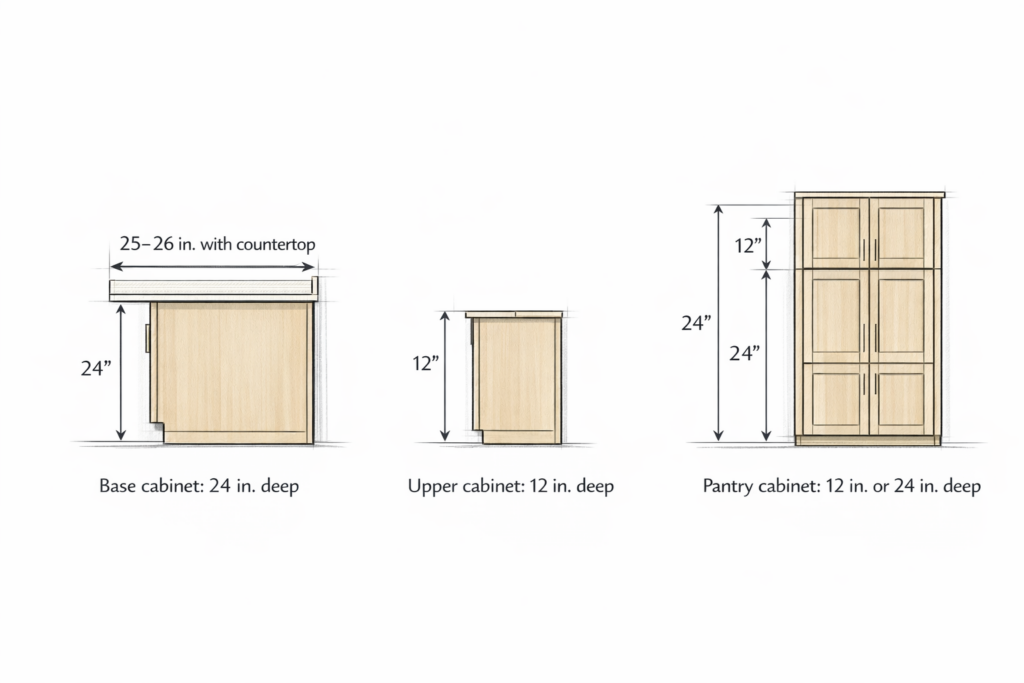
Most kitchens start with a few common depth ranges:
- Base cabinets: 24 inches deep
- Upper cabinets: 12 inches deep
- Pantry cabinets: often 12 or 24 inches deep
These standard sizes work well in many homes, but they are only a starting point. The right cabinet depth depends on your layout, your storage needs, and how you want the kitchen to function.
Standard Base Cabinet Depth
In most kitchens, base cabinets are 24 inches deep before the countertop is installed.
Once the countertop is added, the finished depth usually lands closer to 25 to 26 inches, depending on the material and overhang.
This depth works well because it gives you enough room for:
- Cookware
- Dishes
- Small appliances
- Pull-out storage
- Everyday kitchen essentials
Base cabinet depth is especially important because it affects more than storage. It also influences:
- Countertop workspace
- Walkway space
- Island clearance
- Appliance fit
- Overall kitchen comfort
If cabinets are too shallow, storage can feel limited. If they are too deep in the wrong layout, the kitchen can start to feel tighter and less efficient.
Standard Upper Cabinet Depth
Upper kitchen cabinets are usually 12 inches deep.
This depth helps keep wall cabinets accessible without making the room feel heavy or crowding the workspace below. It is a common choice because it balances storage with a cleaner, more comfortable visual feel.
Twelve-inch uppers typically work well for:
- Plates
- Glassware
- Pantry goods
- Serving pieces
- Everyday kitchen items
Some kitchens use deeper upper cabinets for added storage, but that should be planned carefully so the room still feels open and intentional.
Standard Pantry Cabinet Depth
Pantry cabinets are often more flexible than base or upper cabinets.
Many pantry cabinets are designed around 12-inch or 24-inch depths, depending on what they are meant to store and how the kitchen is laid out.
Shallower pantry cabinets
A shallower pantry cabinet can be a great choice for:
- Canned goods
- Spices
- Dry foods
- Snacks
- Everyday pantry items
These cabinets can make it easier to keep everything visible and within reach.
Deeper pantry cabinets
A deeper pantry cabinet offers more storage capacity, but it usually works best with thoughtful organization features such as:
- Pull-out shelves
- Roll-outs
- Adjustable storage
- Built-in organizers
Standard Depth Is Only the Starting Point
Standard cabinet depths are popular for a reason. They work in most kitchens, coordinate with common appliances, and create a strong foundation for a functional layout.
But standard does not always mean ideal.
The best kitchen designs are shaped around how the homeowner actually uses the space. Someone who cooks often may need a different storage setup than someone who mainly uses the kitchen for entertaining. A homeowner with lots of small appliances, serving pieces, or pantry storage may also need a different approach than someone who wants a more minimal layout.
Cabinet depth matters because it affects not just what fits, but how the whole kitchen functions day to day.
When Different Cabinet Depths Make Sense
There are times when going deeper or shallower in select areas can create a better result.
Small kitchens
In a smaller kitchen, slightly shallower cabinetry in certain areas can help improve circulation and keep the room from feeling crowded.
Larger kitchens
In a larger kitchen, there may be more flexibility for deeper storage in pantry zones, islands, or specialty storage areas.
Appliance planning
Cabinet depth also needs to work with your appliances. Dishwashers, refrigerators, ranges, and built-in features all influence how cabinetry should be planned.
Custom storage features
If the design includes pull-out trays, spice storage, tray dividers, or vertical organizers, cabinet depth should support those features from the start.
Cabinet Depth and Kitchen Workflow
Cabinet depth is not just about measurements. It is also about flow.
A well-designed kitchen should feel natural to use. Prep zones should be convenient. Storage should feel intentional. Cleanup should not feel cramped.
When cabinet depth is planned carefully, it helps support:
- Better movement through the kitchen
- Easier access to storage
- More comfortable prep space
- A layout that feels more purposeful
That is often the difference between a kitchen that simply looks good and one that truly works well every day.
Cabinet Depth Should Support Style and Function
Cabinet depth also affects the overall feel of the room.
It influences the visual weight of the cabinetry, the balance between open space and storage, and how polished the final design feels. In some kitchens, the right depth helps create a cleaner, more streamlined look. In others, it creates room for better storage and more customized functionality.
The goal is not just to follow a standard measurement. The goal is to choose dimensions that support the way the kitchen looks, feels, and functions.
So, How Deep Should Kitchen Cabinets Be?
For most kitchens, a strong starting point looks like this:
- Base cabinets: 24 inches deep
- Upper cabinets: 12 inches deep
- Pantry cabinets: usually 12 or 24 inches deep
From there, the right cabinet depth depends on:
- Your kitchen layout
- The type of storage you need
- The appliances you are using
- How you want the kitchen to function every day
Designing Around the Way You Live
The best kitchen designs are not built around guesswork. They are built around thoughtful planning and decisions that reflect the way you actually live in your home.
Standard cabinet depths are a great place to begin, but the most successful kitchens balance storage, comfort, aesthetics, and workflow in a way that feels natural every time you use the space.
At Premium Wholesale Cabinets, we believe homeowners should feel confident and informed throughout the design process. When cabinet depth is planned the right way, it supports more than storage. It helps create a kitchen that feels elevated, functional, and designed for the way you live.